

Products
Long Fiber Fleece
The long flowing fibers of an Icelandic sheep fleece sets it apart. This is the original long wool sheep stock brought to the island by the Vikings.
Natural colors include white, black, gray, and shades of brown, plus mixes and spotted combinations.
The wool length is about 5-7 inches with flat loft. They fluff up and spread out across a the space.
More about Icelandic sheep below.
The Icelandic Collection
Choose by color and pattern. All sheepskins are long wool. Aside from single hides, see also the Doubles and Quads made from multiple sheepskins sewn together.
Filter:


Thick White and Brown Spotted


White Brown Gray Mix Medium Wool Swedish
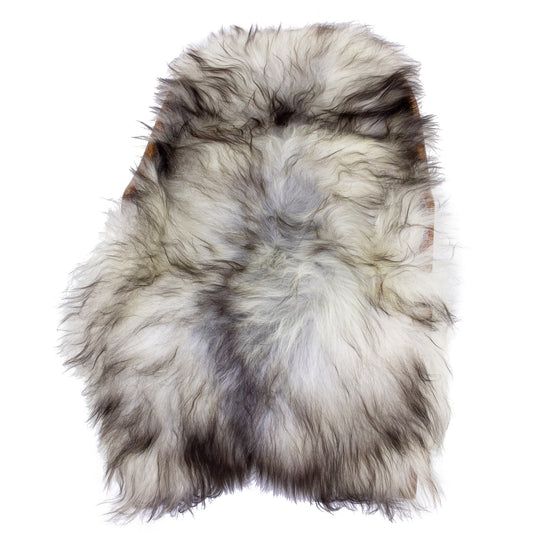

White Gray Black Mix Icelandic
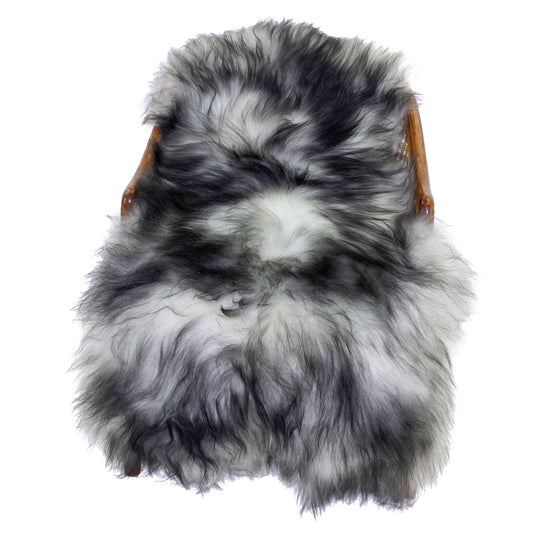

White w Black Dyed Tips Icelandic
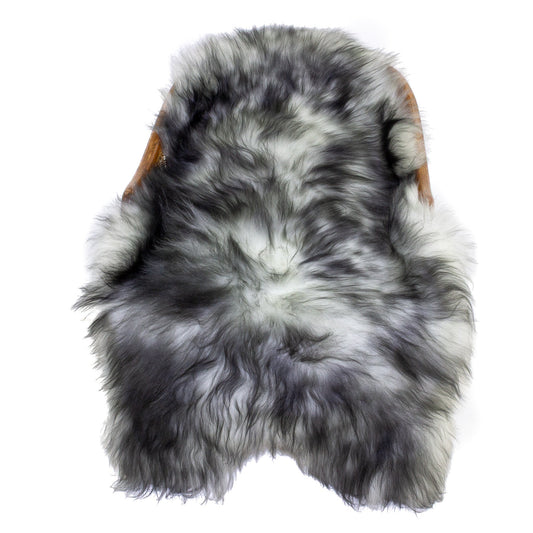

White w Black Dyed Tips Icelandic

White w Black Spots Quad Icelandic Rug

White w Black Spots Quad Icelandic Rug
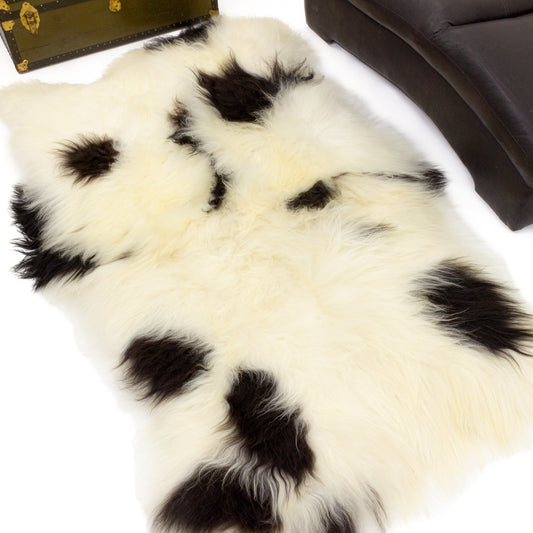
White w Black Spots Quad Icelandic Rug


White w Dark Spots Icelandic


White w Dark Spots Icelandic
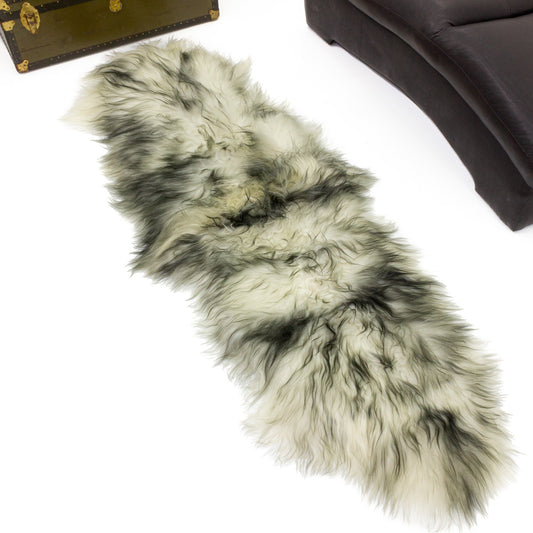
White w Dyed Black Tips Double End-End Icelandic
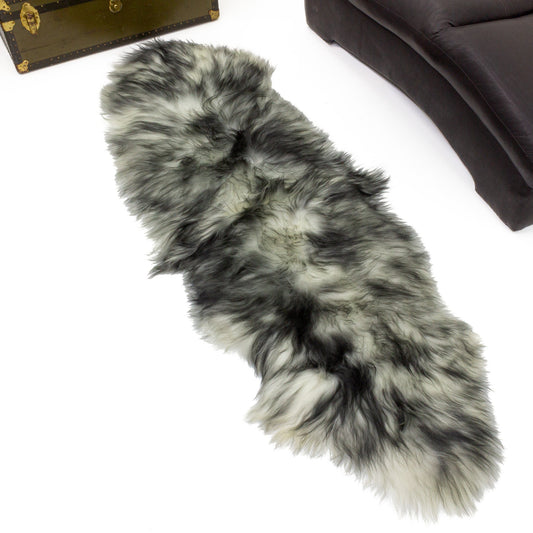
White w Dyed Black Tips Double End-End Icelandic

White w Dyed Black Tips Double End-End Icelandic

White w Dyed Black Tips Double Side-Side Icelandic


White w Gray and Black Icelandic


White w Gray Icelandic


Wide Cushy Golden Ivory w Brown Spots


Wide Natural Dark Gray Icelandic


Wide Natural Gray Icelandic


Wide Soft Thick Cushy Dark w Silver Pattern


Wide Thick Cushy Dark Brown w Silver
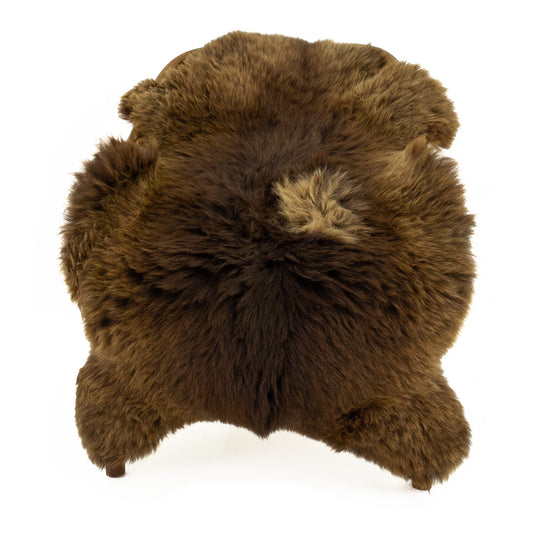

Wide Thick Cushy Light Brown w Spot
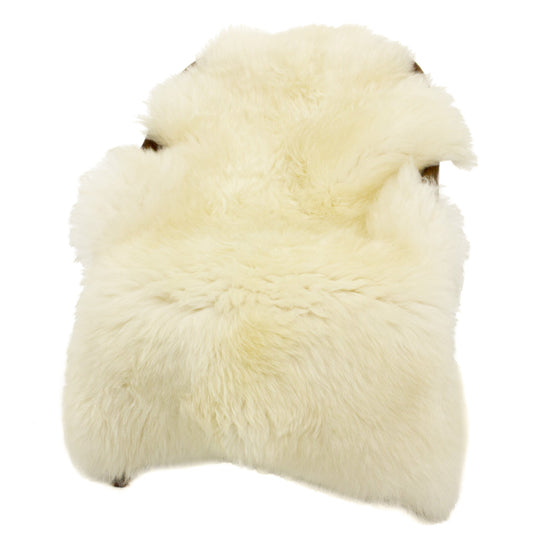

Yoga Select Ivory White
These sheep are an important part of Iceland's economy.
Sheep farming has been a vital activity since the island's founding. Icelandic sheep are hardy and adaptable animals that are well-suited to the challenging environment.
Agriculture and fishing, including sheep farming, generate income and have support Iceland's way of life for centuries. Increased demand for local and sustainable products, both domestically and internationally, have brought quality Icelandic products to new markets.
Sheep in Iceland are raised in a free-range environment and are not subjected to intensive farming practices, making Icelandic lamb a more ethical and sustainable choice for consumers who are concerned about animal welfare and the environmental impact of their food choices.The sector is made up of small, family-run farms that are an important part of the country's cultural heritage, and the traditional methods used to raise and care for sheep in Iceland have been passed down through generations.
Sheep are an inseparable part of traditional Icelandic food. It is a source of high-quality, nutritious protein raised on the rather harsh landscape where few other animals could thrive. Icelandic lamb is known for its tender texture and mild flavor. Icelandic wool is used in a variety of products including clothing, blankets, and other textiles.
Sheep farming has played a vital role in rural Iceland economies and contributed to the recovery after the banking and economic crisis. In addition to generating income and creating employment opportunities, sheep farming has helped preserve cultural heritage and boosted tourism in regions where it has a strong historical and cultural significance.